 Nolan Paxton
Math games are not just a fun distraction; they are powerful tools that can significantly enhance children’s cognitive abilities. By incorporating elements of play into mathematical learning, these games create an engaging environment where young learners can thrive. They encourage creativity, critical thinking, and problem-solving skills, making the subject less intimidating and more approachable. From simple counting games for toddlers to complex puzzles for older students, math games cater to various age groups and learning styles, ensuring that every child can benefit from a playful approach to learning.
The latest trends in educational technology have revolutionized math games, making them more accessible and interactive than ever before. With the rise of online and mobile applications, students can now engage with math concepts anytime and anywhere. These advancements not only enhance motivation but also allow for personalized learning experiences tailored to individual needs. As we explore the multifaceted world of math games, we’ll uncover their educational benefits, the role of technology, and ways to implement them effectively in classrooms.
Exploring the educational benefits of math games for children
Math games have become an integral part of educational strategies aimed at enhancing children’s learning experiences. Engaging in math games can transform traditional learning methods, making mathematics fun and interactive. The playful environment encourages children to absorb mathematical concepts while improving their cognitive skills. As they navigate through various challenges, children are not just playing; they are actively honing crucial abilities that will serve them throughout their educational journey and into adulthood.
Participating in math games significantly enhances cognitive skills by promoting critical thinking, memory retention, and spatial awareness. Cognitive skills are essential for understanding complex subjects, and math games encourage children to think strategically about numbers and relationships. For example, when children play games that require them to solve puzzles or compete against one another, they are engaging in higher-order thinking. This engagement allows them to develop problem-solving abilities as they analyze situations, recognize patterns, and apply mathematical principles to find solutions.
Cognitive Skill Development Through Math Games
The integration of math games into children’s learning routines not only fosters a love for math but also contributes to the development of essential life skills. Engaging in these games can significantly improve problem-solving abilities, as children learn to approach challenges in various ways. For instance, they may need to devise a strategy for winning a game, which could involve calculating odds or managing resources.
Several math games cater to different age groups, each designed to target specific skills and concepts. Here are a few examples that illustrate how math games can be tailored to various developmental stages:
- Number Blocks (Ages 3-5): This game utilizes colorful blocks to teach basic counting, addition, and subtraction. Children learn to recognize numbers and develop fine motor skills as they manipulate the blocks.
- Math Bingo (Ages 6-8): This engaging game combines chance with math practice. Players must solve math problems to fill their bingo cards, reinforcing their knowledge of addition, subtraction, and even simple multiplication.
- Prodigy Math Game (Ages 9-12): This online platform immerses students in a fantasy world where they solve math problems to progress through levels. It adapts to the child’s ability, providing personalized challenges that enhance their mathematical reasoning.
- Math Jeopardy (Ages 12+): This competitive game format encourages teamwork and critical thinking. Players answer math-related questions in various categories, improving their knowledge and quick thinking under pressure.
Through these diverse examples, it is evident that math games are not merely tools for entertainment; they are powerful educational instruments that can significantly impact children’s cognitive development and problem-solving skills. Engaging with such games equips children with the foundational skills necessary for academic success and lifelong learning.
The role of technology in modern math game development
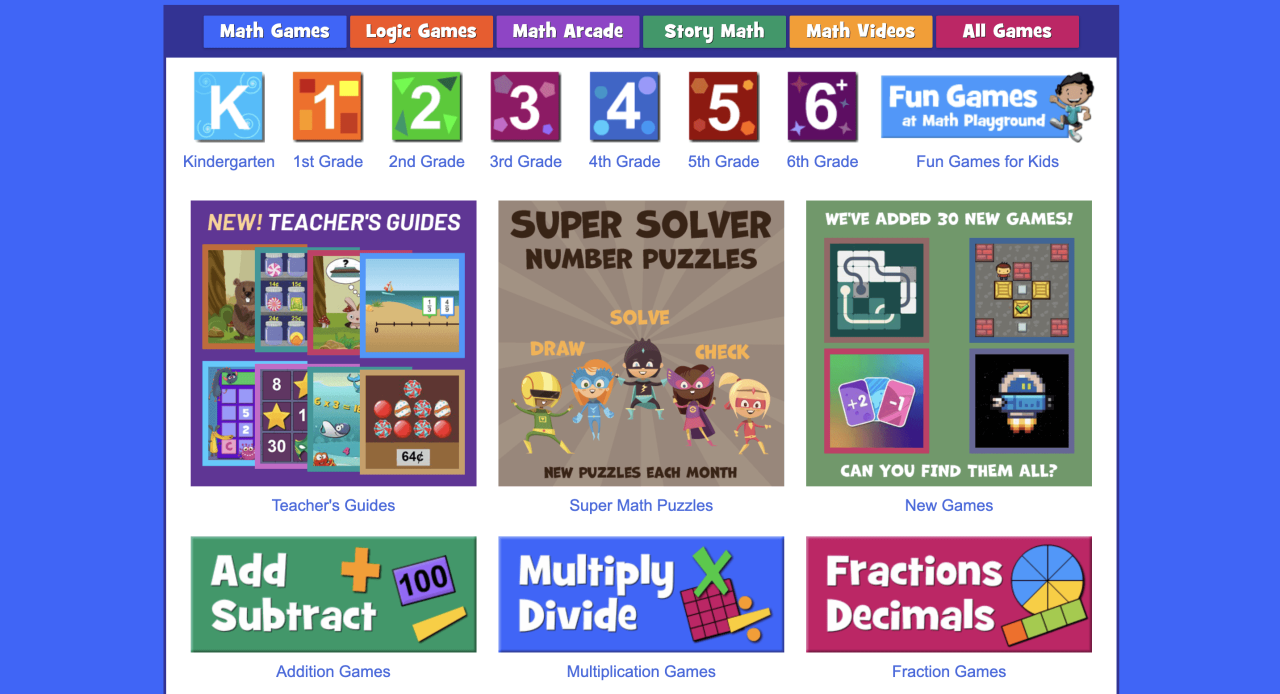
The integration of technology into math game development has revolutionized the way mathematics is taught and learned. Traditional methods of teaching math, often seen as dry and uninspiring, have evolved into engaging and interactive experiences through the use of various technological advancements. These changes have not only made math more enjoyable but have also increased its accessibility to learners of all ages.
Modern math games have benefitted significantly from various technological innovations. The introduction of artificial intelligence, adaptive learning algorithms, and virtual reality has enabled developers to create personalized and immersive learning environments. These advancements have transformed the way students interact with mathematical concepts by providing tailored gameplay experiences that can adapt to individual learning speeds and styles.
Impact of online math games on student engagement and motivation
Online math games have emerged as a powerful tool for enhancing student engagement and motivation. These games create a dynamic learning environment that encourages active participation. By incorporating elements of competition, rewards, and instant feedback, students are more likely to be motivated and invested in their learning process.
The online platform allows for a wide variety of game formats that cater to different interests and skill levels. This diversity plays a crucial role in keeping students engaged. For instance, multiplayer features enable collaboration and competition among peers, which fosters a sense of community and accountability in learning.
Key features that contribute to heightened engagement include:
- Interactive Challenges: These challenges encourage problem-solving through fun scenarios, making learning feel less like a chore and more like an adventure.
- Rewards and Achievements: Badges, points, and leaderboards provide tangible incentives for progress, motivating students to improve their skills.
- Instant Feedback: Immediate responses to answers help learners understand their mistakes in real time, reinforcing learning outcomes.
Accessibility through mobile applications
The advent of mobile applications has significantly expanded the accessibility of math games, allowing learners to engage with math anytime and anywhere. This convenience has removed traditional barriers to learning, such as geographic location or access to physical resources. As a result, students can practice their math skills during their commute, breaks, or at home.
Mobile applications often feature user-friendly interfaces and engaging game mechanics that make them appealing to a broad audience. Many apps utilize gamification strategies to maintain interest and encourage continuous learning. This approach has proven effective in reaching various demographics, including younger children and adult learners.
Examples of accessible mobile math games include:
- Prodigy Math: An adaptive math platform for students in grades 1-8 that blends curriculum-aligned content with engaging gameplay.
- Mathway: A problem-solving app that provides step-by-step solutions to math problems, useful for students needing homework assistance.
- Kahoot!: While not exclusively a math game, it offers interactive quizzes that can cover a wide range of math topics, fostering competitive learning.
Creating an engaging math game for classroom use
Designing an interactive math game tailored for the classroom can transform the learning experience, making it both fun and educational. Engaging students in a hands-on manner helps reinforce mathematical concepts while fostering a cooperative learning environment. The following steps Artikel how to effectively create a math game that resonates with your curriculum and students.
Steps to Design an Interactive Math Game
To develop a successful math game, it is essential to follow a systematic approach. The game should align with learning objectives and be adaptable to various skill levels. Here are the key steps to consider in the design process:
- Identify Learning Objectives: Begin by determining the specific math skills or concepts that the game will address. For example, if the focus is on multiplication, consider how to incorporate this into the gameplay.
- Choose a Game Format: Decide on the type of game that best suits your objective. Options include board games, card games, or digital platforms. Each format has its benefits, such as ease of setup or interactive components.
- Develop Rules and Guidelines: Create clear and concise rules to facilitate gameplay. Ensure that the rules encourage participation and are easy to follow, reducing confusion during play.
- Incorporate Challenges and Rewards: Design challenges that align with the learning objectives, offering rewards or points to encourage engagement. This could involve correct answers, teamwork, or creative problem-solving.
- Test and Revise: Pilot the game with a small group of students to gather feedback. Use their insights to refine the game, making adjustments to improve clarity, enjoyment, and educational value.
Importance of Teamwork in Game Design
Integrating teamwork into the math game enhances collaborative learning and communication among students. When players work together, they can share strategies, discuss different approaches to problem-solving, and support one another in grasping complex concepts. This approach not only promotes a positive classroom environment but also develops critical social skills.
“Teamwork makes the dream work.”
By fostering a spirit of cooperation, educators can create a game that not only challenges students academically but also strengthens their ability to work in groups. Encouraging teamwork can also lead to a more dynamic and engaging classroom atmosphere.
Template for Developing Math Games
Creating a structured template can streamline the game development process for teachers. Below is a simple template that educators can use to Artikel their math games.
| Component | Description |
|---|---|
| Game Title | Name of the game that reflects its theme or learning objective. |
| Target Grade Level | Specify the grade or age group the game is designed for. |
| Learning Objectives | List the specific math skills or concepts the game aims to teach. |
| Materials Needed | Detail all materials required to play the game, such as cards, boards, or digital resources. |
| Game Rules | Artikel the rules clearly, ensuring they are easy to understand and follow. |
| Gameplay Duration | Estimate how long the game will take to play, helping to plan classroom time accordingly. |
| Assessment | Describe how student understanding and engagement will be assessed during or after gameplay. |
This template serves as a foundational guide for teachers to develop engaging and educational math games that can enhance the learning experience in their classrooms.
Comparing different types of math games
Math games play a pivotal role in engaging students and solidifying their understanding of mathematical concepts. Among the various formats available, board games and digital games stand out as popular choices. Each type has unique attributes that can enhance learning experiences, and understanding their advantages and disadvantages is crucial for educators aiming to optimize their teaching methods.
Advantages and disadvantages of board games
Board games offer a tactile and social experience that encourages collaboration among players. They typically require physical components, such as boards, cards, and dice, which can enhance the learning process through hands-on interaction. However, there are limitations to consider.
- Advantages:
- Promotes face-to-face interaction, fostering teamwork and communication skills among students.
- Encourages critical thinking and strategic planning as players navigate game mechanics.
- Can be tailored to various skill levels, making them accessible to a wide range of learners.
- Disadvantages:
- Limited scalability, as group sizes may restrict the number of participants.
- Time-consuming setup and gameplay can detract from instructional time.
- Difficulties in tracking progress and outcomes compared to digital formats.
Complementary role of digital math games
Digital math games serve as an innovative supplement to traditional learning methods, offering unique benefits that align with contemporary educational practices. These games often incorporate engaging graphics and interactive elements that capture students’ attention.
- Benefits of digital math games:
- Immediate feedback helps students understand their mistakes and reinforces learning.
- Easily tracks student progress, providing valuable data for educators to customize instruction.
- Facilitates individualized learning paths, allowing students to work at their own pace.
Engagement levels of students using board games versus digital platforms
Engagement is a critical factor in the effectiveness of math games. Studies indicate that both formats have their strengths regarding student involvement.
- Board games:
- Encourage social interaction, leading to increased motivation for group play.
- Often elicit higher levels of enthusiasm during gameplay due to the tactile experience.
- Digital platforms:
- Utilize gamification elements that keep students returning to improve their scores or levels.
- Visual and auditory stimuli can enhance engagement, making learning feel more like play.
The choice between board games and digital games should consider the specific needs of students and the learning objectives of the curriculum.
The influence of competitive play on learning math through games
Competition in math games can serve as a powerful catalyst for student engagement and skill enhancement. By introducing an element of rivalry, these games create an environment where students feel motivated to excel. This competitive spirit can lead to increased participation, a deeper understanding of mathematical concepts, and improved overall performance.
The balance between competition and collaboration is crucial in math education. While competition can motivate students to push their boundaries and strive for excellence, collaboration fosters teamwork and helps students learn from one another. Striking this balance allows educators to harness the benefits of both approaches, creating a dynamic learning environment.
Impact of Competitive Play on Skill Improvement
Competitive math games have been shown to enhance students’ problem-solving abilities and conceptual understanding. When students engage in competition, they are often more inclined to practice and refine their skills. The following points highlight how competitive play influences learning:
-
Increased Motivation:
The desire to win encourages students to invest more effort into their studying and practice.
-
Real-time Feedback:
Competitions often provide immediate results, allowing students to quickly see areas for improvement.
-
Goal Setting:
Competitors set personal and team goals, fostering a sense of achievement as they reach those milestones.
Examples of Competitive Math Games Promoting Learning
Several competitive math games effectively combine learning with fun and teamwork. These games not only encourage individual achievement but also promote collaboration among players. Some notable examples include:
-
Math Jeopardy:
A classic game that encourages students to answer questions in a competitive format, reinforcing knowledge across various math topics.
-
Kahoot:
An interactive quiz platform where students can compete in real-time, answering math questions while seeing their peers’ scores.
-
Math Relay Races:
Teams compete to solve math problems in a relay format, fostering teamwork and quick thinking under pressure.
These examples illustrate how competitive math games can successfully engage students, improve their math skills, and cultivate a spirit of collaboration among peers. By integrating competition into math education, educators can create a vibrant learning atmosphere that encourages both individual excellence and teamwork.
Tailoring math games for diverse learning needs and styles
Creating an inclusive learning environment is essential for effectively teaching math concepts to all students, especially those with diverse learning needs and styles. By tailoring math games, educators can foster engagement and enhance understanding among learners with varying abilities. This customization not only supports students with learning disabilities but also caters to different preferences in how they absorb information, ensuring that everyone has an equal opportunity to succeed.
One effective strategy for modifying math games is to incorporate elements that address various learning disabilities. For instance, simplifying instructions, using clear visual aids, and providing opportunities for repeated practice can significantly improve comprehension for students with dyslexia or ADHD. Incorporating tactile experiences can also be beneficial; for example, using physical manipulatives to represent numerical concepts helps kinesthetic learners grasp abstract ideas in a hands-on manner.
Incorporating sensory elements for enhanced learning
Integrating visual, auditory, and kinesthetic elements into math games creates a richer learning experience and caters to different learning preferences. Visual elements such as charts, graphs, and color-coded materials can help visual learners make connections between concepts. Auditory components, including songs or rhymes, can reinforce memory and aid auditory learners in retaining information. Kinesthetic learners, on the other hand, benefit from interactive activities that allow them to move and engage physically with the content.
To further enhance this multi-sensory approach, consider the following adaptable math games suitable for different learning preferences:
- Math Bingo: A game that can incorporate visual cards and auditory calls, where students listen for the numbers that correspond to their cards.
- Math Relay Races: An active game where students solve problems at stations and physically run to the next station once they complete a task, catering to kinesthetic learners.
- Interactive Story Problems: Crafting engaging stories that incorporate math concepts, allowing students to visualize scenarios while practicing problem-solving.
- Math Puzzles: Using jigsaw puzzles with math-related images or equations that students can piece together, combining visual and kinesthetic learning.
- Digital Math Games: Online games that provide immediate feedback and use animations to visually represent problems, appealing to both visual and auditory learners.
The adaptation of these games not only makes math more accessible but also promotes collaborative learning. Students can engage with peers who have different learning styles, fostering an environment of teamwork and support. Tailoring math games ensures that every learner can participate and thrive in their mathematical journey.
Assessing the effectiveness of math games in reinforcing mathematical concepts
Educators play a vital role in determining how well math games contribute to student understanding and retention of mathematical concepts. By systematically assessing the effectiveness of these games, they can optimize their teaching methods to enhance learning outcomes. This involves evaluating not only the engagement that games foster but also the actual improvements in student performance as a result of their interactive nature.
To effectively measure the impact of math games on student performance, various assessment methods can be employed. These strategies can help educators gauge how well students are grasping concepts and identify areas that require additional focus. Effective assessments provide insights into both individual and group learning progress, helping educators adapt their instructional strategies accordingly.
Assessment methods used alongside math games
Various assessment methods can complement the use of math games in the classroom. The following approaches can be utilized to evaluate student performance effectively:
- Pre- and post-assessments: Administering a test before and after the introduction of a math game allows educators to measure knowledge gains directly attributable to the game.
- Observation checklists: Teachers can observe students during gameplay, noting specific skills being utilized and areas where students may struggle, providing qualitative data on their understanding.
- Student reflections: Encouraging students to reflect on their gameplay experience through journals or discussions can provide valuable insights into their perceived learning and understanding.
- Game-specific metrics: Many digital math games offer built-in analytics that track student progress, time spent, and scores, providing quantitative data that can be analyzed for performance trends.
- Peer assessments: Involving students in assessing each other’s understanding during collaborative gameplay can enhance engagement and provide a different perspective on their learning process.
In a notable case study, a fourth-grade classroom at River Valley Elementary School incorporated math games into their curriculum to improve engagement and understanding of fractions. The teacher introduced a variety of digital and board games focused on fraction concepts, allowing students to work in pairs and small groups.
The effectiveness of this approach was measured through pre- and post-assessments specifically designed to evaluate students’ understanding of fractions. Additionally, the teacher used observation checklists during gameplay sessions to monitor collaboration and problem-solving skills.
The results showed a significant increase in test scores, with an average improvement of 25% in student understanding of fractions. Students reported enjoying the interactive nature of the games, leading to increased motivation and attendance in math classes. The reflective journals highlighted that many students felt more confident in their abilities and expressed a desire to explore more complex math concepts. This integration of math games not only reinforced mathematical ideas but also fostered a positive learning environment.
Last Recap
In conclusion, math games are an essential resource for educators and parents alike, turning the often daunting subject of math into an enjoyable adventure for children. By fostering cognitive skills, promoting collaboration, and adapting to diverse needs, these games bridge the gap between education and entertainment. As we continue to develop innovative math games, the potential for deeper learning and engagement remains limitless, reminding us that play is a vital component of effective education.
FAQ
What age group is best for math games?
Math games can benefit children of all ages, with specific games designed for toddlers up to high school students.
Are math games effective in improving grades?
Yes, many studies show that regular engagement in math games can lead to improved understanding and higher grades in mathematics.
Can math games be played alone or do they need to be played in groups?
Many math games can be played solo, but group games promote teamwork and enhance social skills.
How can I incorporate math games into daily learning?
Set aside time each day for game play, integrate them into existing lessons, or use them as rewards for completing assignments.
What types of math concepts can be learned through games?
Math games can cover concepts like addition, subtraction, multiplication, division, fractions, and geometry, among others.