 Nolan Paxton
Logic puzzles have captivated minds for centuries, weaving a rich tapestry of intellectual challenge and entertainment. From ancient civilizations crafting riddles to modern-day enthusiasts solving intricate Sudoku, these puzzles have evolved into diverse forms that test our reasoning skills and cognitive abilities.
Whether you’re a casual solver or a seasoned puzzle master, logic puzzles offer a unique blend of fun and mental workout. They engage players by presenting problems that require critical thinking, creativity, and perseverance, making them not just a pastime but a key tool for brain development.
Logic puzzles and their historical significance
Logic puzzles have intrigued minds for centuries, serving as a bridge between mathematics, philosophy, and entertainment. Their evolution from ancient riddles to modern-day brainteasers highlights the enduring human fascination with problem-solving and critical thinking. The historical significance of logic puzzles lies not only in their entertainment value but also in their role in the development of logical reasoning skills and cognitive processes throughout history.
The journey of logic puzzles began in ancient civilizations, where riddles and puzzles were often used in literature and philosophy. In ancient Greece, philosophers like Plato employed logical reasoning in their dialogues, while the works of mathematicians such as Euclid laid the groundwork for logical thought. As cultures evolved, so did the complexity and form of logic puzzles. The medieval period saw the rise of intricate puzzles, often presented in the context of courtly games or intellectual challenges among scholars. The Renaissance brought about a renewed interest in logic and reasoning, with puzzles becoming a favored pastime of the educated elite.
One of the most famous examples from history is the “Einstein’s Riddle,” which challenges solvers to deduce the arrangement of five houses based on a series of clues. This puzzle, attributed to Albert Einstein, is a classic illustration of deductive reasoning and has stood the test of time due to its complexity and elegance. Another timeless puzzle is the “Knights and Knaves” logic puzzle, formulated by Raymond Smullyan, which involves characters who either always tell the truth or always lie, forcing solvers to navigate deception through logical deduction.
The significance of these puzzles extends beyond simple amusement; they have been utilized in educational contexts to develop critical thinking and problem-solving skills. Logic puzzles are now integral to fields like computer science, artificial intelligence, and cognitive psychology, where understanding patterns and reasoning is crucial. Furthermore, the growth of digital platforms has led to a resurgence in their popularity, with countless apps and websites dedicated to logic puzzles, making them accessible to a new generation.
In summary, the historical significance of logic puzzles is evident in their evolution, cultural relevance, and educational value. These engaging challenges continue to captivate minds and foster logical reasoning skills, demonstrating their timeless appeal in a rapidly changing world.
The cognitive benefits of solving logic puzzles
Engaging with logic puzzles can provide a plethora of cognitive benefits, enhancing critical thinking and problem-solving skills that are essential in everyday life. As individuals work through these puzzles, they are compelled to analyze information, recognize patterns, and formulate strategies to reach solutions. This mental engagement stimulates various areas of the brain and contributes to overall cognitive health. The act of solving puzzles not only sharpens existing skills but can also cultivate new ones, making it an invaluable activity for learners of all ages.
Logic puzzles serve as a unique exercise for the mind, challenging individuals to think outside the box and approach problems from different angles. As people immerse themselves in these puzzles, they enhance their ability to discern relationships among different pieces of information and to apply logical reasoning. This process improves critical thinking and fosters a methodical approach to problem-solving, which can be beneficial in academic, professional, and personal contexts. Through regular practice, individuals develop a cognitive toolkit that includes creativity, analytical skills, and the capacity for abstract thought.
Enhancement of cognitive functions and memory retention
Solving logic puzzles significantly contributes to the enhancement of cognitive functions and memory retention. Engaging in such activities activates neural pathways that strengthen connections in the brain. With consistent practice, individuals can experience improvements in various cognitive functions, such as attention, focus, and memory. These benefits extend beyond the immediate task at hand and can positively influence daily activities and overall mental acuity.
As individuals tackle logic puzzles, they often employ techniques that require recalling information and applying it in novel ways. This not only reinforces memory but also aids in developing strategies for better information retention. The relationship between puzzle-solving and memory can be illustrated through specific cognitive benefits:
- Cognitive Flexibility: Engaging with diverse puzzles encourages shifting between different concepts and problem-solving approaches, which enhances cognitive flexibility.
- Working Memory Improvement: Logic puzzles often necessitate holding multiple variables in mind simultaneously, thereby improving working memory capacity.
- Pattern Recognition: Regular exposure to various puzzles helps individuals become adept at recognizing patterns, crucial for both academic success and real-world problem-solving.
- Critical Thinking Skills: As puzzlers analyze clues and deduce solutions, they enhance their ability to think critically, a skill essential in decision-making processes.
The cognitive training derived from solving logic puzzles also correlates with improved age-related cognitive function. Studies have shown that engaging in mentally stimulating activities, such as these puzzles, can delay the onset of cognitive decline associated with aging. For instance, older adults who regularly solve puzzles demonstrate slower rates of memory loss compared to their non-puzzling counterparts.
In summary, the act of solving logic puzzles is not merely a recreational activity; it is a powerful tool for enhancing cognitive functions and improving memory retention. By fostering critical thinking and problem-solving skills, these puzzles play a vital role in maintaining mental acuity, making them a valuable addition to anyone’s routine.
Different types of logic puzzles and their characteristics
Logic puzzles are engaging challenges that stimulate our logical reasoning and problem-solving abilities. They come in various forms, each with unique rules and characteristics, making them appealing to a wide range of puzzlers. This diversity not only enhances our cognitive skills but also provides entertainment and satisfaction upon completion. Below, we explore several intriguing categories of logic puzzles, detailing their distinctive features.
Categories of Logic Puzzles
Understanding the different types of logic puzzles is essential for enthusiasts looking to sharpen their skills or simply enjoy a good challenge. Below are some popular categories, along with descriptions and examples.
-
Sudoku:
A number-placement puzzle where the objective is to fill a 9×9 grid with digits from 1 to 9. Each row, column, and 3×3 subgrid must contain all digits without repetition. Variations exist, such as “Killer Sudoku,” which incorporates arithmetic constraints. -
Nonograms:
Also known as “Picross” or “Griddlers,” these puzzles involve filling in cells on a grid based on numeric clues that indicate how many contiguous groups of filled cells are in each row and column. The solution reveals a pixelated image. -
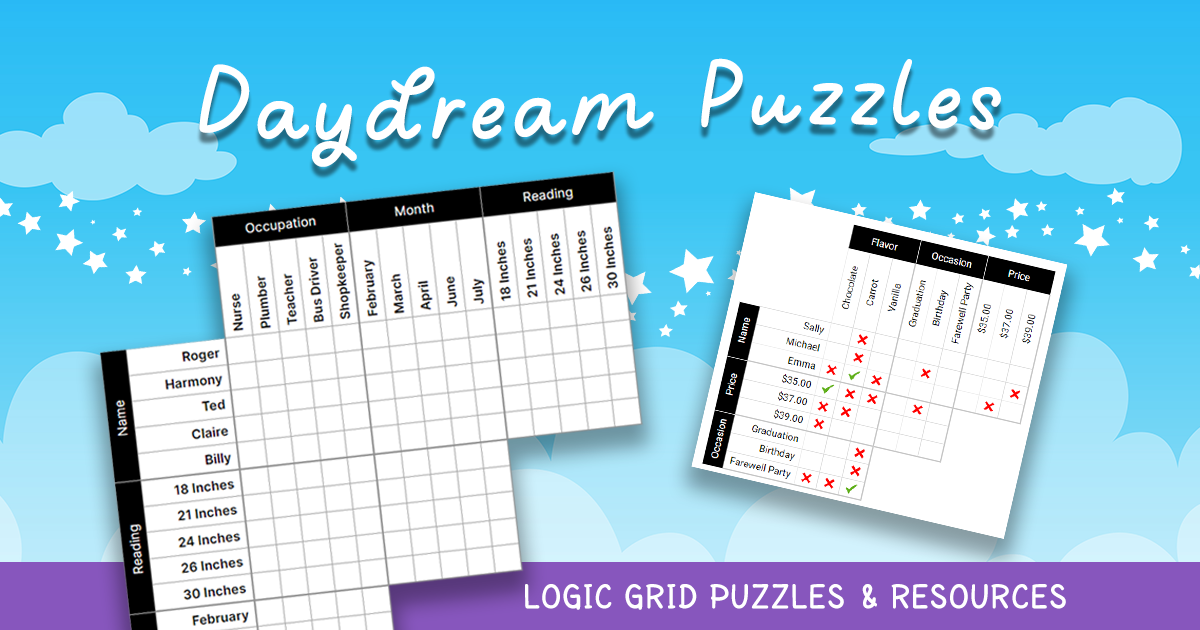
Logic Grid Puzzles:
These require solvers to use a given set of clues to fill out a grid, eliminating possibilities until arriving at the correct arrangement. A classic example involves determining the owners of different pets based on clues provided. -
Riddles:
Short puzzles or statements that require creative thinking to solve. They often have a twist or play on words. An example is, “What has keys but can’t open locks? A piano.” -
Cryptograms:
Text-based puzzles where each letter is replaced by another, requiring solvers to decode the message. They often involve substitution ciphers, making them a test of both logic and language skills. -
Logic Mazes:
A navigation challenge that involves finding a path through a maze while adhering to certain constraints, such as not retracing steps or following specific routes indicated by clues.
Each type of logic puzzle uniquely contributes to enhancing critical thinking and problem-solving skills. They challenge the mind, encourage creative thinking, and foster perseverance. Puzzlers often find joy in the process of deduction and reasoning, making these puzzles a favorite pastime for many.
Techniques for effectively solving logic puzzles
Logic puzzles challenge our analytical thinking and problem-solving abilities, requiring a systematic approach to unravel their complexities. Understanding and employing effective techniques can lead to successful resolutions. By breaking down the problem into manageable components, solvers can enhance their accuracy and speed. This guide explores essential methodologies for tackling complex logic puzzles step-by-step, equipping you with the skills to navigate even the most intricate challenges.
Step-by-Step Methodology
When approaching a complex logic puzzle, it’s crucial to follow a structured methodology to ensure a thorough understanding of the problem. Here’s a recommended step-by-step process:
1. Read the Puzzle Carefully: Take your time to read all instructions and conditions Artikeld in the puzzle. Note any specific requirements, as these are essential to finding the solution.
2. Identify Key Information: Highlight or jot down critical pieces of information. This includes names, relationships, and any constraints that may affect the solution.
3. Create a Diagram or Table: Visual aids can be incredibly helpful. Use tables or diagrams to organize information systematically. This helps in visualizing relationships and tracking possibilities.
4. Establish Relationships: Determine how the different elements of the puzzle are related. Recognizing connections helps in narrowing down options as you progress.
5. Use Process of Elimination: As you gather information, start eliminating impossible or unlikely scenarios. This technique helps focus on viable options and simplifies the problem.
6. Test Your Hypotheses: If you have a potential solution, test it against the conditions of the puzzle. If it fits all requirements, you may have found the answer; if not, revisit your earlier deductions.
Common Strategies
Employing certain strategies can also enhance your ability to solve logic puzzles effectively. Here are some common approaches:
1. Pattern Recognition: Many puzzles exhibit recurring themes or structures. Familiarizing yourself with common patterns can speed up your problem-solving process. For example, noticing that a particular arrangement or number consistently yields results in previous puzzles can guide your approach.
2. Trial and Error: While this might seem inefficient, trial and error can be a useful strategy, especially in puzzles lacking clear direction. Begin with an assumption and see if it leads to a logical conclusion. If it doesn’t, backtrack and try another avenue.
3. Consider Alternative Scenarios: Sometimes, thinking outside the box and considering unconventional solutions can lead to breakthroughs. This may involve reinterpreting the puzzle or approaching it from a different angle.
4. Stay Organized: Keep your notes and diagrams orderly. Disorganized information can lead to confusion, so using a systematic approach in documenting your thoughts is vital for maintaining clarity.
Utilizing a combination of these techniques can significantly increase your chances of successfully solving logic puzzles.
The cultural impact of logic puzzles in society

Logic puzzles have woven themselves into the fabric of society across cultures, influencing various aspects of life, from education to entertainment and social interactions. Their unique ability to engage the mind and foster critical thinking has allowed these puzzles to transcend mere pastime activities, becoming essential tools in learning environments and social engagements. They not only challenge individuals but also serve as a bridge connecting people through shared experiences of problem-solving and creativity.
The educational influence of logic puzzles is profound. They are often used as a pedagogical tool in classrooms worldwide, stimulating students’ analytical skills and enhancing logical reasoning. Logic puzzles encourage students to think outside the box, promoting perseverance and boosting confidence in problem-solving. For instance, in Japan, logic puzzles known as “sudoku” have gained immense popularity in schools and among adults, often featured in newspapers and magazines. These puzzles cultivate not only logical thinking but also patience and concentration, making them a staple in educational systems.
In addition to education, logic puzzles have significantly impacted social interactions. They provide a common ground for people to bond over shared challenges, often leading to conversations that deepen relationships. Game nights featuring logic puzzles or escape rooms, where participants solve a series of puzzles to “escape” a themed room, have become popular social activities in various cultures. These interactive settings encourage teamwork and collaboration, fostering a sense of community among participants.
Numerous cultures employ logic puzzles in diverse forms, showcasing their universal appeal. In Mexico, for example, “Lotería,” a traditional game similar to bingo that incorporates logic and strategy, has become a family favorite. In addition, the classic Western crossword puzzles challenge players’ vocabulary and problem-solving abilities while promoting social engagement in cafes and community centers.
Another culture rich in logic puzzle tradition is India, where “chaturanga”—an ancient strategy game—has evolved into contemporary chess, known internationally for its intricate logical challenges. This strategic game connects generations, illustrating how logic puzzles can transcend time, becoming part of cultural heritage.
Logic puzzles serve as a bridge, connecting individuals through shared challenges and stimulating collective problem-solving.
Through these examples, it is clear that logic puzzles are not just a source of entertainment; they play a crucial role in shaping educational practices, enhancing social interactions, and enriching cultural experiences. As communities engage with these puzzles, they continue to foster critical thinking and collaboration, proving that the impact of logic puzzles goes far beyond simple enjoyment.
Logic puzzles in the age of technology
In the era of technological advancements, the realm of logic puzzles has undergone a significant transformation. With the rise of digital platforms and mobile applications, these brain teasers have become more accessible and engaging than ever before. This shift has not only changed the way individuals interact with puzzles but also broadened their reach across diverse demographics. The fusion of traditional logic puzzles with modern technology has opened up new avenues for entertainment, learning, and cognitive development.
The digitalization of logic puzzles has revolutionized how people engage with them. Previously enjoyed in books or magazines, puzzles are now available on a myriad of devices, including smartphones, tablets, and computers. This transition allows users to enjoy puzzles anytime and anywhere, enhancing convenience and engagement. Many apps have incorporated interactive features, such as hints, timers, and leaderboards, which encourage users to improve their skills and compete with others. These elements have made solving puzzles not just a solitary activity, but a social experience as well, fostering community through forums and social media platforms.
Accessibility is a key factor in the proliferation of logic puzzles in the modern world. With the advent of technology, barriers such as physical location or economic constraints have diminished. A smartphone user can access high-quality puzzles for free or at a minimal cost, providing opportunities for those who might not have had access to traditional puzzle sources. Educational apps targeting children, for instance, use gamification to present logic puzzles as fun, interactive challenges, thereby promoting critical thinking skills from an early age. Furthermore, the global reach of the internet means that puzzles designed in one culture can easily find audiences worldwide, further diversifying the types of puzzles available.
The integration of analytics and machine learning into puzzle apps has also transformed user experiences by personalizing challenges based on skill levels. Through data collection, these apps can adapt the complexity of puzzles to match a user’s progress, ensuring that they remain both challenging and achievable. This dynamic approach keeps users engaged and encourages continuous learning.
“Logic puzzles are more than just entertainment; they stimulate the mind and foster problem-solving abilities.”
Overall, technology has breathed new life into logic puzzles, making them more engaging, accessible, and beneficial to cognitive development across all age groups. The future of logic puzzles looks promising as they continue to evolve alongside emerging technologies, ensuring their place in the world of entertainment and education.
Creating your own logic puzzles
Designing original logic puzzles can be an exciting and creative endeavor. Crafting puzzles not only challenges your logical thinking but also provides fun and engagement for those who solve them. Whether for personal enjoyment, educational purposes, or as a means to entertain others, the process of creating these puzzles involves careful planning and consideration. Below is a structured guide that will help you navigate the journey of designing your own unique logic puzzles.
Steps to Designing Logic Puzzles
Creating a logic puzzle requires a blend of creativity, structure, and an understanding of the audience’s skill level. The following steps Artikel a systematic approach to designing effective puzzles.
1. Choose a Theme: Start by selecting an engaging theme that will form the backbone of your puzzle. This could be anything from a mystery scenario to a mathematical challenge. Themes help set the tone and context.
2. Determine Difficulty Level: Consider the target audience. Are they beginners, or do they possess advanced logic skills? Adjust the complexity of the puzzle accordingly, balancing the challenge to keep it intriguing without leading to frustration.
3. Artikel the Puzzle Structure: A clear structure is crucial. Artikel the components of your puzzle, such as variables, clues, and the final goal. Ensure that the clues logically lead to the solution and that there is only one correct answer.
4. Draft the Puzzle: Write out the puzzle in a clear and concise manner. Use simple language and avoid ambiguity. Ensure each clue is integral to solving the puzzle.
5. Test Your Puzzle: This step is essential. Have others test the puzzle to gather feedback. Watch how they approach it, take note of where they struggle, and refine the clues and structure as necessary.
6. Refine and Finalize: Based on feedback, make adjustments to enhance clarity and ensure solvability. This might involve rewording clues or altering the structure for better flow.
“Testing your puzzle is as important as creating it; it ensures an enjoyable experience for solvers.”
The importance of testing and refining cannot be overstated. A well-tested puzzle not only confirms its validity but also enhances the overall experience for the solver. Engaging with a variety of testers provides insights into potential misunderstandings and helps to streamline the logic, ensuring your final product is both challenging and enjoyable.
Engaging communities through logic puzzles
Logic puzzles serve as a fantastic medium for community engagement, allowing individuals to connect over shared interests in problem-solving and intellectual challenges. These puzzles not only stimulate critical thinking but also foster collaboration among enthusiasts. Engaging communities through various formats such as competitions, clubs, and online platforms can enhance the social aspect of puzzle-solving, making it more enjoyable and rewarding.
One effective method to encourage community participation is through the organization of puzzle competitions. These events can range from local meet-ups at cafes and libraries to international online tournaments. Competitions can feature different types of puzzles, such as Sudoku, crosswords, or riddles, appealing to a wide audience. Participants can compete individually or in teams, promoting camaraderie and teamwork. Additionally, offering prizes and recognition for winners can attract more participants and raise the stakes, making the event even more exciting.
Another way to foster engagement is through the establishment of logic puzzle clubs. These clubs can meet regularly, either in-person or virtually, allowing members to discuss strategies, share puzzles, and collaborate on solving challenging problems. Clubs can create a welcoming environment for newcomers, facilitating skill development and enhancing the overall experience. Members can rotate in leading sessions, contributing their own puzzles or insights, which keeps the club dynamic and engaging.
Online platforms have emerged as popular venues for puzzle enthusiasts to connect and collaborate. Websites like Reddit host dedicated forums where members can share their favorite puzzles, seek solutions, and engage in discussions. For instance, the r/puzzles subreddit features a wide variety of puzzles, ranging from easy to extremely challenging, and encourages users to post their own creations. Similarly, platforms like PuzzleNation and Logic Puzzles Online have forums where users can tackle puzzles together, share tips, and celebrate each other’s achievements.
The inclusion of social media groups also plays a vital role in enhancing community involvement. Groups on platforms like Facebook or Discord can facilitate real-time communication among members, enabling them to share puzzles instantly and discuss strategies. These platforms allow for a more casual and interactive exchange, which can attract a younger audience to the world of logic puzzles.
In addition, puzzle apps and websites often feature community boards where users can create and share custom puzzles. This not only provides a platform for creativity but also allows members to challenge each other, fostering a sense of friendly competition. Such interactive environments can significantly boost member engagement and retention, as users often return for new content and community involvement.
Ultimately, fostering community engagement through logic puzzles can lead to meaningful connections among individuals who share a passion for problem-solving. By creating engaging competitions, forming clubs, and utilizing online forums, enthusiasts can enhance their puzzle-solving experiences while building a supportive and collaborative community.
Last Point
In conclusion, logic puzzles are more than mere games; they are a powerful way to enhance cognitive function and foster community. As we continue to embrace them in various forms—both analog and digital—they remain an enduring element of our intellectual culture, encouraging us to think outside the box and connect with others in shared challenges.
Clarifying Questions
What are some famous logic puzzles?
Some well-known examples include the Monty Hall problem, the Zebra puzzle, and Einstein’s riddle.
How do logic puzzles improve my brain?
They enhance critical thinking, problem-solving abilities, and memory retention by challenging the brain to identify patterns and formulate strategies.
Can children benefit from solving logic puzzles?
Absolutely! Logic puzzles can help children develop essential skills such as logical reasoning, patience, and perseverance.
Are there apps for solving logic puzzles?
Yes, there are numerous apps available for various types of logic puzzles, including Sudoku, nonograms, and more, making them easily accessible.
How can I create my own logic puzzles?
Start by picking a theme or concept, set clear rules, and create a series of logical relationships that lead to a solution. Testing and refining your puzzles is also key to ensuring they’re enjoyable.